
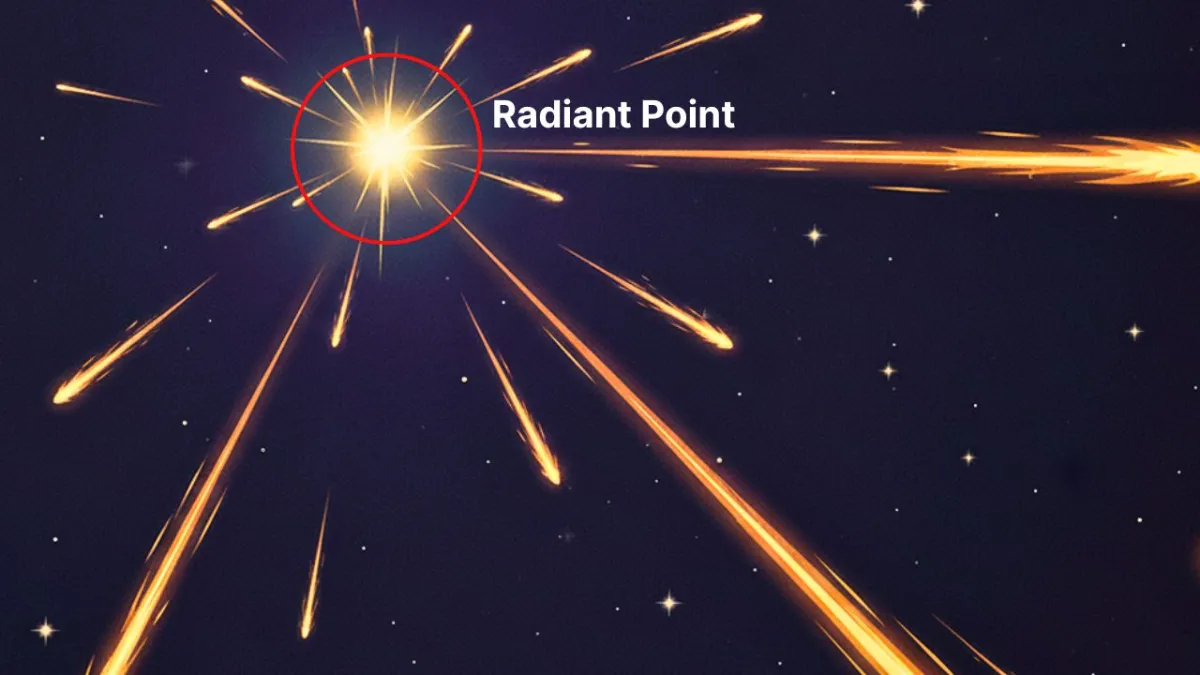
A radiant point is the spot in the sky where the streaks of a meteor shower seem to start. You can picture it as the meeting point of many trails, even though the meteors are not actually gathering there. Observers use this point to know where to look, when the shower peaks, and how active it may get through the night. Each meteor shower has its own radiant that sits in a specific constellation, and that link helps name the shower. Once you learn how radiant points work, watching a shower becomes much easier and a bit more fun.
Why Meteor paths seem to meet
Meteors shoot into the atmosphere at high speed, all moving in nearly the same direction as Earth runs into a stream of debris left by a comet or asteroid. Their paths look separate on paper, but our line of sight blends them. It is the same effect that makes train tracks seem to meet in the distance. The meteors travel on parallel lines, yet they look as if they burst from a single spot.
How Astronomers use the Radiant
The location of a radiant tells astronomers the parent body of a meteor shower. For example, the Perseids appear to come from the constellation Perseus, so the shower takes its name from that region. By tracking the radiant over many years, researchers can follow changes in the debris trail and learn how the parent comet evolves.
Observers on the ground use the radiant in a more practical way. If the radiant rises higher in the sky, you can expect more meteors. When it sits low, the count drops. This simple rule helps you decide the best time to step outside. It also gives you a reason to stay awake longer than you planned, which might be the most dangerous part of stargazing.
When a Radiant Moves
The radiant drifts slightly through the night as Earth rotates. It can also shift from one night to the next as our planet moves along its orbit. These small changes are normal and easy to follow with a sky map or a stargazing app. You do not need any special gear. Just find a dark spot, look up, and let the radiant guide you.
Why It Matters for Skywatchers
Knowing the radiant helps you set expectations. It tells you where to aim your attention and when the show will be at its best. You do not have to stare straight at it; in fact, you will catch more meteors by looking a bit to the side. Still, the radiant acts like the title of the event, giving every shower a clear identity.
Understanding this point turns a simple night of watching streaks into a clearer and more rewarding experience. It also gives you a small piece of the method behind how astronomers track activity in our skies, without needing any equations or equipment.
Radiant Point of Meteor Showers
Each meteor shower has a different radiant point. Here’s a list of the radiant points of all the meteor showers that are observed throughout the year, starting from the Quadrantids in January to the Ursids in December.
| Meteor Shower | Radiant Point |
| Quadrantids | Constellation Boötes, near the former constellation Quadrans Muralis |
| Alpha Centaurids | Constellation Centaurus, near the star Alpha Centauri |
| Lyrids | Constellation Lyra, near the star Vega |
| Eta Aquariids | Constellation Aquarius, near the star Eta Aquarii |
| Arietids | Constellation Aries |
| Southern Delta Aquariids | Constellation Aquarius, near the star Delta Aquarii |
| Alpha Capricornids | Constellation Capricornus |
| Perseids | Constellation Perseus |
| Aurigids | Constellation Auriga, near the star Capella |
| Draconids | Constellation Draco |
| Orionids | Constellation Orion, near the star Betelgeuse |
| Southern Taurids | Constellation Taurus, near the star Aldebaran |
| Northern Taurids | Constellation Taurus |
| Leonids | Constellation Leo, near the star Regulus |
| Geminids | Constellation Gemini |
| Ursids | Constellation Ursa Minor, near the star Kochab |

Leave a Reply